
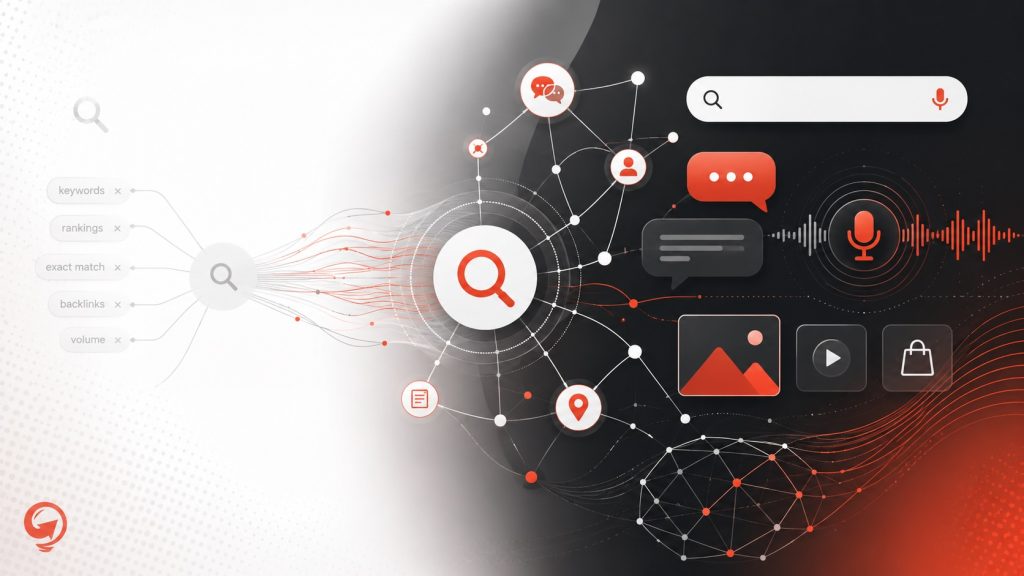
Old keyword strategies were built for a simpler search world. A business picked a phrase, placed that phrase in the title, repeated it across the page, and hoped Google matched the page to a searcher.
That approach no longer matches how people search.
Today, a customer may ask a voice assistant a full question. A homeowner may upload a photo and ask what service they need. A contractor may compare options through AI search. A buyer may search by problem, symptom, location, budget, brand, urgency, or desired outcome.
That shift changes how content needs to be planned.
At Pinpoint Digital LLC, we build content around meaning, context, and buyer intent, not just exact-match phrases. Traditional keywords still matter, but they are only one layer of a stronger semantic search strategy. The real goal is to help search engines, AI systems, and real people understand what a business does, where it works, who it helps, and why that business deserves trust.
Why Traditional Keyword Targeting Falls Short
Traditional SEO often treats keywords like isolated phrases:
“web design CT”
“contractor marketing”
“SEO company near me”
“content optimization tools”
Those phrases can still help shape a page. The problem starts when the whole strategy stops there.
Search engines no longer rely only on whether a page repeats a phrase. They evaluate entities, related topics, user behavior, page structure, trust signals, local relevance, and whether the content fully answers the intent behind the search.
A page that repeats “contractor marketing” 20 times may still fail if it does not explain:
- What type of contractor the content is for
- What business problem the contractor is trying to solve
- What services support the solution
- What location the company serves
- What proof supports the claim
- What next step the visitor should take
That is why a stronger content strategy must move from keyword placement to user intent optimization.
Search Has Become Conversational
People do not always search in short phrases anymore. They ask full questions, especially when using voice search, mobile search, and AI tools.
A traditional search may look like:
“SEO agency CT”
A conversational search may look like:
“What kind of content should a Connecticut contractor publish to show up in Google and AI search?”
Those searches are connected, but they are not the same. The second query reveals much more intent. The person wants strategy, industry relevance, location context, and a practical answer.
That is where conversational search SEO becomes important. Pages need to answer the natural language questions buyers actually ask before contacting a company.
For example, a strong content page should be able to support questions like:
- How does semantic content help local SEO?
- Why are exact-match keywords no longer enough?
- What content should a small business publish for AI search visibility?
- How should service pages connect to blog posts?
- How can internal links help search engines understand a website?
Semantic Content Builds Topic Relationships
Semantic content is not about abandoning keywords. It is about surrounding core keywords with related concepts that clarify meaning.
For example, a page targeting “content optimization tools” should not only list tools. It should also explain:
- Search intent
- Entity relationships
- Topic clusters
- Internal linking
- Content scoring
- Page structure
- Schema markup
- AI search visibility
- Conversion goals
- Local relevance
That wider context helps search engines understand the page as part of a full topic, not just a single phrase.
A strong semantic search strategy asks:
“What does a person need to know before choosing this service?”
“What related questions does this topic trigger?”
“What supporting pages should this content connect to?”
“What proof, examples, and structure make the answer more useful?”
That approach helps a website become a stronger digital asset. Instead of publishing disconnected posts, the site becomes a network of answers that support service visibility, brand authority, and lead generation.
Multimodal Search Changes Content Expectations
Multimodal search means users can search through more than text. They may use voice, images, screenshots, videos, maps, reviews, or AI prompts to find answers.
That matters because content must now support more discovery paths.
A contractor may be found through a project photo. A local service company may be surfaced because its website explains service areas clearly. A small business may earn visibility because its page structure, headings, schema, and internal links make the content easier to interpret.
For a website, multimodal readiness can include:
- Descriptive image file names
- Useful alt text
- Clear service page headings
- FAQ sections based on real buyer questions
- Internal links to related services
- Local signals tied to towns and regions
- Schema markup that supports entity clarity
- Blog content that answers conversational searches
- Case studies, reviews, and project proof
This is where content and web design need to work together. A great article can struggle if the website is hard to crawl, slow to load, poorly structured, or disconnected from service pages. Our Web Design CT services focus on websites that look professional, support conversions, and give search engines a clearer path through the business.
Why Conceptual Clustering Beats One-Off Blog Posts
A one-off blog post can rank, but a content cluster builds authority.
Conceptual clustering means grouping content around a central topic, then connecting related pages through internal links. For example, a contractor marketing cluster may include:
- Contractor website strategy
- Local SEO for contractors
- Service area pages
- Google Business Profile optimization
- Review generation
- Project gallery optimization
- Schema markup
- Blog topics for buyer questions
- Conversion-focused landing pages
Each page supports the others. Search engines can see how the content fits together. Visitors can move naturally from education to action.
That is the value of internal linking. It helps users find the next useful resource and helps search systems understand the relationship between topics.
How User Intent Optimization Works
User intent optimization means matching content to what the searcher actually wants.
A search for “content optimization tools” may have several possible intents:
- The user wants software recommendations
- The user wants a process for improving content
- The user wants to compare tools and human strategy
- The user wants to improve rankings
- The user wants AI search visibility
- The user wants help from an agency
A page that only lists tools may miss the larger opportunity. A better page explains when tools help, where tools fall short, and how a strategy-led team turns tool data into a stronger content plan.
At Pinpoint Digital LLC, our content process focuses on the full search journey:
Awareness: The buyer realizes old keyword tactics are not enough.
Research: The buyer searches for semantic SEO, AI search, or content optimization tools.
Evaluation: The buyer compares agencies, tools, and strategies.
Action: The buyer needs a clear reason to start a conversation.
That journey should shape the page structure, headings, calls to action, FAQs, and internal links.
Content Optimization Tools Are Inputs, Not Strategy
Content optimization tools can be useful. They can identify keyword gaps, competitor terms, readability issues, structure problems, and related topics.
But tools do not know the full business context.
They do not always know which services are most profitable. They do not always understand a local market. They do not always know which leads are worth targeting. They may recommend terms that add volume but weaken conversion focus.
That is why tools should support strategy, not replace it.
A strong content plan combines:
- Keyword data
- Search intent analysis
- Local market knowledge
- Competitor review
- Website structure
- Internal link planning
- Conversion goals
- Brand voice
- Technical SEO
- GEO readiness
This blended approach turns content into a business asset, not just a ranking attempt.
GEO Ready Content Needs Clear Answers
Generative engine optimization, or GEO, focuses on making content easier for AI systems to understand, summarize, and connect to user questions.
A GEO ready page should include:
- Direct answers near the top of the page
- Clear headings that match natural questions
- Specific service and location context
- Entity-rich language
- Internal links to related resources
- Structured sections that can be summarized
- Helpful FAQs
- Trust signals, such as reviews, examples, and experience
- Schema markup where appropriate
We have already explored this shift through The Rise of Generative Engine Optimization and Structured Data for Home Services. These topics connect directly to semantic content because AI systems need clear, consistent context to understand what a business should be known for.
How Local Businesses Can Apply This Strategy
For Connecticut businesses, semantic content should connect services, locations, problems, and proof.
A local service company should not only publish a generic service page. It should explain the service, the local conditions that shape demand, the customer problems solved, the process used, and the areas served.
For example:
- A roofer can explain coastal weather, asphalt shingle choices, roof ventilation, and town-specific service areas.
- A landscaper can connect lawn care, hydroseeding, irrigation, seasonal maintenance, and local soil conditions.
- A plumber can connect emergency calls, well systems, water pressure, fixture repairs, and town pages.
- A digital marketing agency can connect SEO, web design, content strategy, paid ads, local search, and GEO.
That kind of content creates a deeper map of expertise.
The New Content Rule: Build for Meaning First
Traditional keywords fail when they are treated as the full strategy. Modern search requires a clearer understanding of topics, entities, intent, media, and user behavior.
The best content answers real questions, connects related ideas, supports local relevance, and gives both people and AI systems enough context to trust the page.
At Pinpoint Digital LLC, our approach to semantic content is built for that new search reality. We create content systems that help businesses show up across Google, AI search, local results, and conversational discovery paths.
For companies ready to move beyond outdated keyword stuffing, the next step is not more random content. The next step is a semantic content strategy that connects every page to a larger goal.
Visit Pinpoint Digital LLC to start building a smarter search strategy for the way people actually search today.
Semantic Strategy FAQs
What is semantic content?
Semantic content is content built around meaning, context, and related concepts rather than exact-match keyword repetition. It helps search engines and AI systems understand the full topic behind a page.
Why are traditional keywords less effective now?
Traditional keywords are less effective because modern search systems evaluate intent, entities, topic relationships, content quality, local relevance, and trust signals. Repeating a phrase is not enough to prove usefulness.
What is conversational search SEO?
Conversational search SEO focuses on natural language questions people ask through voice search, mobile search, and AI tools. It helps content match how users actually ask for answers.
How do content optimization tools help?
Content optimization tools can reveal keyword gaps, related topics, structure issues, and competitor patterns. They work best when paired with human strategy, local knowledge, and conversion planning.
What makes content GEO ready?
GEO ready content uses clear answers, structured headings, entity-rich language, internal links, FAQs, and schema support where appropriate. This helps AI systems better understand and summarize the page.