
Google Ads generally offers faster visibility and lead-generation opportunities, while SEO builds organic visibility that can generate leads over the long term without paying for every click. Neither channel automatically delivers better leads. The winner depends on search intent, competition, conversion rates, customer acquisition costs, and available budget. For many local businesses, combining SEO and Google Ads provides a stronger approach than relying exclusively on one channel.
SEO vs. Google Ads: What’s the Difference?
Local businesses need a steady flow of qualified leads to grow. But when deciding where to spend marketing dollars, one question comes up repeatedly: Should we invest in SEO or Google Ads?
At Pinpoint Digital, LLC, we help Connecticut businesses develop digital marketing strategies focused on measurable leads, conversions, and revenue.
Both channels place businesses in front of people searching for services, but they work differently.
Search Engine Optimization (SEO) improves a website’s visibility in unpaid search results through relevant content, technical optimization, local business information, and website improvements.
Google Ads, also known as pay-per-click advertising (PPC), allows businesses to bid for advertising placements associated with relevant searches.
The biggest distinction is how businesses acquire visibility and what happens when advertising stops.
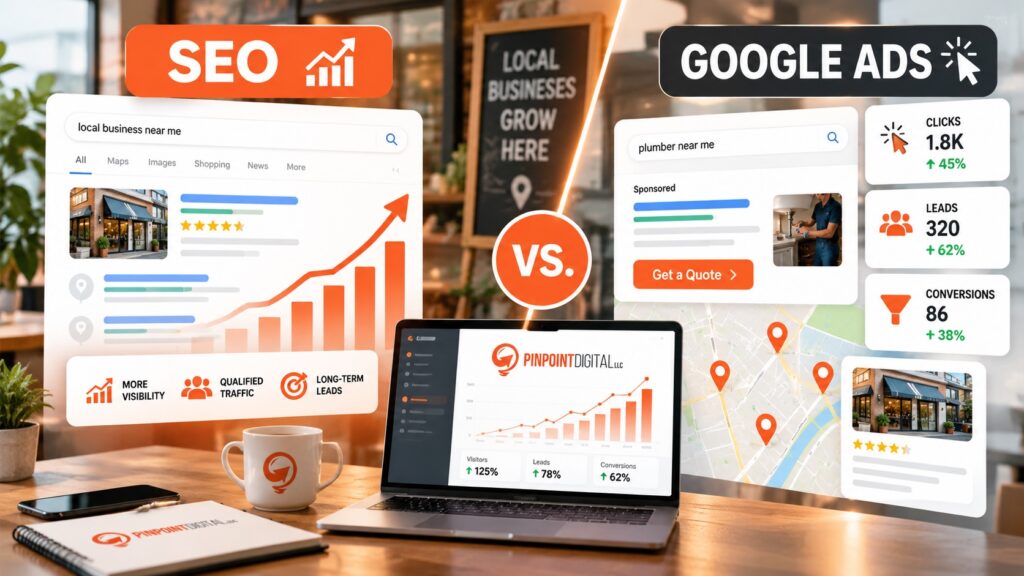
PPC vs. SEO: Side-by-Side Comparison
| Factor | SEO | Google Ads |
|---|---|---|
| Initial visibility | Gradual | Potentially immediate |
| Traffic cost | No charge per organic click | Usually charged per click |
| Ongoing investment | Content, optimization, maintenance | Ad spend and management |
| Lead quality | Depends on search intent | Depends on targeting and intent |
| Long-term value | Can compound over time | Depends on continued ad spending |
| Targeting control | Limited direct control | Detailed campaign targeting |
| Best use | Sustainable organic visibility | Immediate or targeted demand |
Neither strategy guarantees rankings, conversions, or profitable leads.
1. Which Generates Leads Faster: SEO or Google Ads?
Google Ads: Faster Visibility
When local businesses need calls quickly, Google Ads often provides the faster route.
A properly configured campaign can begin reaching customers once ads are approved and eligible to run.
For example, a plumber targeting “emergency plumber Hartford CT” can advertise to people actively searching for immediate assistance.
Paid search allows businesses to control geographic targeting, advertising budgets, and keyword selection.
However, visibility does not guarantee qualified leads. Poor targeting or an ineffective landing page can waste advertising dollars.
SEO: Building Organic Lead Generation
SEO generally requires more patience.
We focus on optimizing service pages, improving Google Business Profiles, developing useful content, and correcting technical website problems.
Google explains that some SEO changes may take several months to produce measurable search results.
Once a website gains relevant organic visibility, it can continue attracting visitors without a separate advertising charge for each click.
For companies planning sustained growth, SEO can become a valuable long-term marketing asset.
2. SEO vs. Paid Search: Which Costs Less?
The answer depends on campaign performance.
Google Ads typically requires ongoing advertising spend. Competitive keywords may become expensive, particularly in markets where multiple contractors compete for the same customers.
SEO also requires investment in content, technical maintenance, website improvements, and ongoing optimization.
The difference is how those expenses produce results over time.
A successful SEO strategy can generate leads from content created months earlier. Paid search campaigns generally need an active budget to continue delivering paid clicks.
However, organic rankings can change, and SEO requires continued maintenance.
We recommend comparing cost per qualified lead rather than simply looking at cost per click.
3. Which Produces Higher-Quality Local Business Leads?
Both SEO and Google Ads can attract customers with strong purchasing intent.
Consider two search examples:
“How much does roof replacement cost?”
This informational search may attract homeowners researching a future project. An optimized SEO article can introduce the roofing company and build trust before the customer requests an estimate.
“Roof replacement contractor near me”
This commercial search suggests stronger immediate hiring intent. Both a relevant organic service page and a targeted Google Ad can compete for that customer.
The distinction is not that one channel automatically produces better leads.
Search intent, landing-page relevance, customer trust, and follow-up determine whether traffic becomes revenue.
4. How to Measure SEO and PPC Lead Quality
At Pinpoint Digital, we recommend tracking outcomes beyond website visits and advertising clicks.
Important performance metrics include:
- Cost Per Lead (CPL): Marketing spending divided by generated leads.
- Cost Per Qualified Lead: Spending divided by leads that meet your service and customer requirements.
- Lead-to-Customer Conversion Rate: Percentage of leads becoming paying customers.
- Customer Acquisition Cost (CAC): Total acquisition spending divided by new customers.
- Return on Investment (ROI): Profitability relative to marketing costs.
For example, a campaign spending $1,500 and generating 30 qualified leads has a $50 cost per qualified lead.
However, if only two of those leads become customers, the acquisition cost is $750 per customer.
We recommend connecting call tracking, form submissions, and CRM sales records to marketing reports.
That helps determine which channel creates profitable jobs rather than just inquiries.
5. Should Local Businesses Use SEO and Google Ads Together?
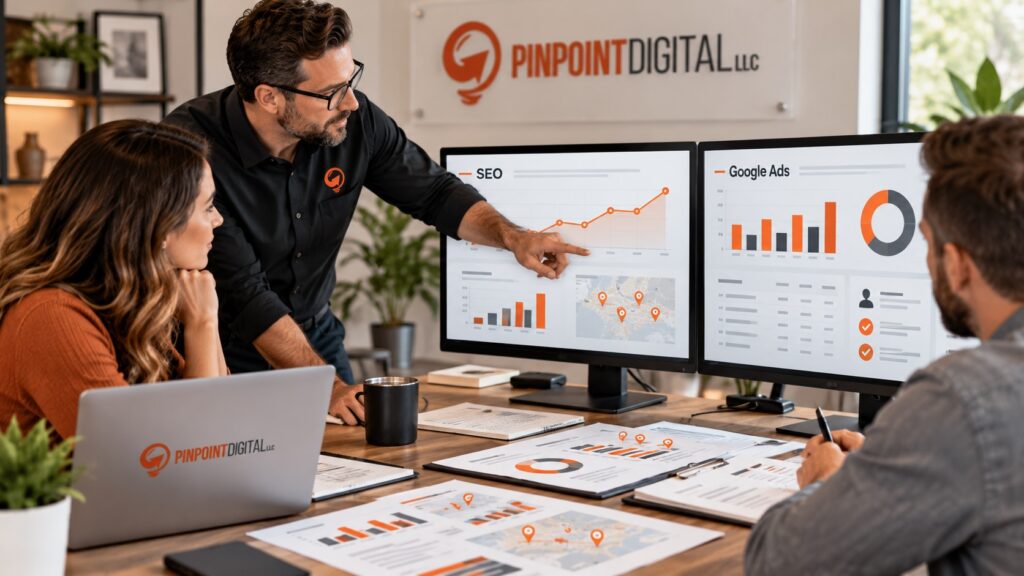
For many businesses, combining both strategies makes sense.
We recommend this approach:
Use Google Ads for immediate opportunities. Target urgent, high-value services and seasonal promotions while gathering conversion data.
Build SEO for long-term visibility. Optimize service pages, location content, Google Business Profiles, and supporting educational articles.
Use paid search data to guide content. Keywords producing qualified advertising leads may reveal opportunities for organic service pages.
Improve landing pages for both channels. Fast websites, clear calls to action, trust signals, and relevant content can support conversion performance.
According to Google Search Central, purchasing Google Ads does not improve organic search rankings.
Both channels should be managed as separate but complementary marketing investments.
Our contractor marketing services combine SEO, targeted advertising, and conversion-focused website strategies to support local business growth.
For a deeper look at technical SEO performance, explore our related article, How Hidden Technical SEO Errors Sabotage Your Rankings.
Frequently Asked Questions
Is SEO better than Google Ads for small businesses?
SEO may provide stronger long-term value, while Google Ads can generate visibility faster. The better option depends on budget, competition, and business goals.
Do Google Ads leads convert better than organic leads?
Not necessarily. Conversion quality depends on keyword intent, targeting, landing pages, pricing, and customer experience.
Can SEO replace Google Ads completely?
Some businesses generate sufficient organic leads without paid campaigns. Others benefit from continued advertising for competitive or seasonal services.
Should a new local business start with SEO or PPC?
A new business needing immediate leads may prioritize targeted PPC while building its SEO foundation. The best allocation depends on available budget and expected returns.
Grow Your Local Business With Pinpoint Digital, LLC
The SEO vs. Google Ads decision should focus on profitable customer acquisition, not simply search rankings or advertising clicks.
At Pinpoint Digital, LLC, we help Connecticut businesses build digital marketing strategies combining search visibility, conversion optimization, and measurable lead generation.
Whether you’re a contractor, landscaper, home service provider, or small business owner, our goal is to turn marketing investments into valuable customer opportunities.